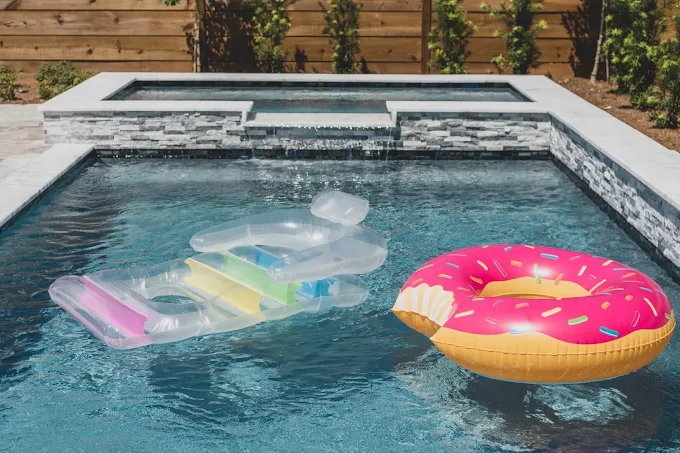
Heavy rain can turn a driveway, patio, pool deck, or outdoor kitchen into a shallow pond in a hurry. Water that sits against concrete or collects near the home can create slippery areas, wash soil out of beds, stain hard surfaces, and send runoff into places where it doesn’t belong. As a result, channel trench drains give that surface water a clear path out.
A channel drain is a long, narrow drain set into the ground with a grate across the top. Instead of collecting water at one small point, the drain catches runoff across a wider line. That makes this type of drain a smart fit for broad hard surfaces where water moves in a sheet rather than toward one small low spot.
For homeowners asking, “what is a channel drain?” the easiest answer is this: it is a surface drainage system that catches water along a straight or curved run and carries it to a planned outlet. At Miller Outdoors, these drains can become part of a larger drainage installation plan based on the grade, hardscape, soil, and water flow around the property.
How Do Channel Trench Drains Move Water Away From Hard Surfaces?
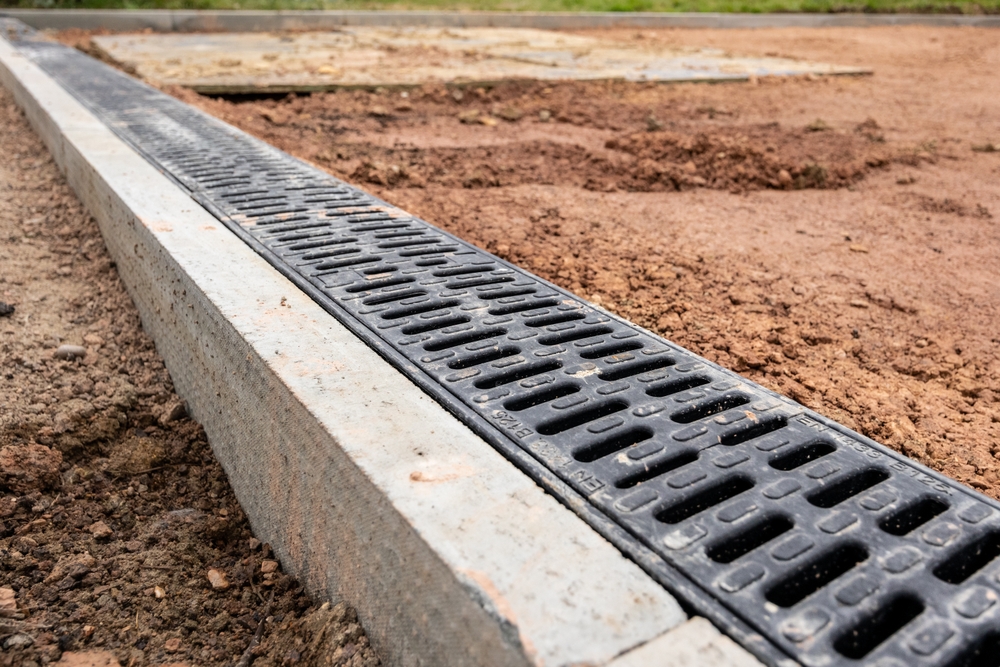
Channel trench drains work through a simple setup. The grate sits level with, or just below, the surrounding surface. Rainwater flows into the opening, enters the long channel below, and travels through the drain to an outlet.
In addition, that outlet matters just as much as the channel itself. A drain that catches water but has nowhere safe to send it can shift the problem from one part of the yard to another. Miller Outdoors looks at where the water starts, how much runoff reaches the area, where the property slopes, and where the collected water can discharge.
The U.S. Environmental Protection Agency explains that paved surfaces can increase stormwater runoff since less water soaks into the ground. On a home site, driveways, patios, walkways, roofs, and pool decks can send a large amount of rainwater across the property during a strong storm. A well-planned drain gives that runoff a controlled route instead of letting it spread across the surface.
Where Can Channel Trench Drains Work Around a Home?
For example, a linear drain can fit several parts of an outdoor property. The right location depends on how water moves during rain, so Miller Outdoors starts with the site rather than dropping a drain into the first wet spot.
Across driveways and garage entries
A long drain can catch water before it rolls toward a garage door or low section of the driveway. The grate spans the runoff path, so it can collect water across more surface area than a small basin.
Along patios and outdoor living areas
Water pooling near seating, kitchens, or covered spaces can make the area harder to use after storms. Pairing channel trench drains with a planned outdoor living space can keep drainage in mind before pavers, concrete, counters, and other features go in.
Near pool decks
Pool areas already handle splash water, cleaning water, and rain. A properly placed channel drain can move surface water away from walking areas, and Miller Outdoors can plan drainage alongside pool design and construction so the deck and drain work together.
Between hard surfaces and planting areas
Runoff from concrete can wash mulch, soil, and small plants out of beds. A drain placed along the edge can catch part of that flow before it crosses into the planting area, which can support a cleaner yard design and installation plan.
What Problems Can Channel Trench Drains Help Reduce?
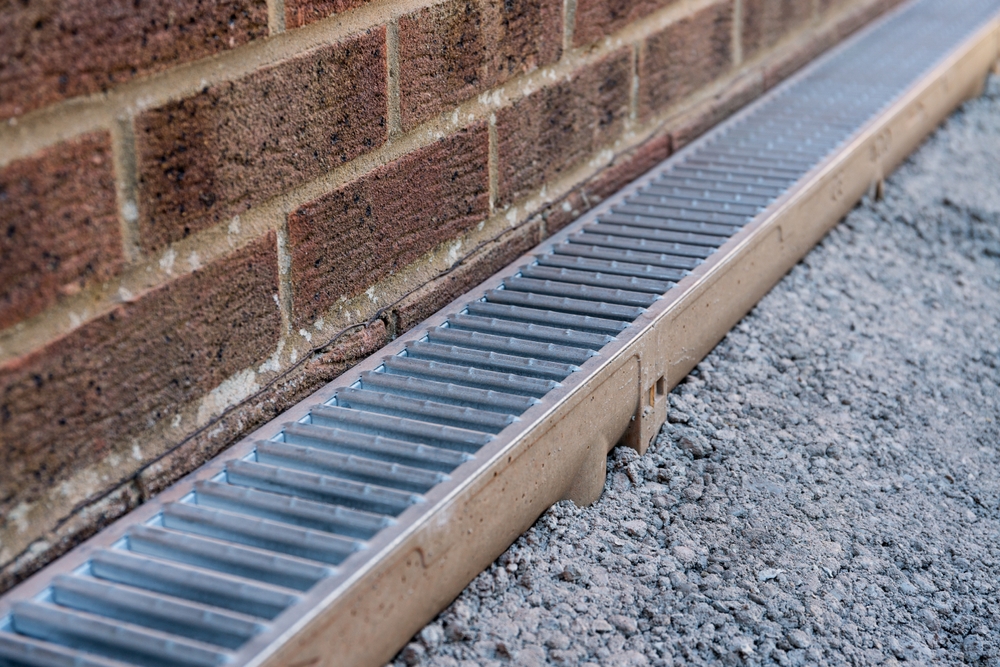
Surface drainage problems rarely stay in one neat spot. Water follows grade, finds low areas, and may keep moving until something blocks it. For that reason, the wet area a homeowner sees may sit several feet away from the actual source of the runoff.
Channel trench drains can help reduce standing water on hard surfaces, repeated puddles near doors, water crossing walkways, muddy edges around patios, and runoff washing through planting beds. In turn, better surface drainage can make outdoor areas easier to use after rain and can reduce repeated cleanup.
At the same time, drainage needs can connect with other outdoor systems, too. Irrigation heads, pipe routes, grading, and planting zones all affect how water moves through a yard. Miller Outdoors can review drainage during an irrigation installation project so one system doesn’t create trouble for another.
How Are Channel Trench Drains Different From Other Drainage Options?
By comparison, a channel drain handles surface flow across a line. A catch basin collects water at one point. A French drain works below the surface to collect and redirect water moving through saturated soil or gravel. Each option solves a different type of water problem.
For example, a driveway that sends a wide sheet of rainwater toward a garage may call for channel trench drains across the pavement. A low lawn area may need a catch basin. A soggy section of soil may call for another drainage method.
Miller Outdoors may use one type or a mix of drainage methods based on the property. That site-based plan matters, since adding more drains isn’t the same as fixing the water path.
How Does Miller Outdoors Plan Channel Trench Drains?
For that reason, good drainage starts with water movement. Before installation, Miller Outdoors reviews the slope, runoff source, hard surfaces, nearby structures, likely outlet, and any outdoor projects planned for the same area.
The process may include checking:
Where water enters the problem area.
Rain may come from a driveway, roof edge, patio, pool deck, or higher section of the property. Finding that source helps place the drain where it can catch water before it spreads.
Where the water can go after collection.
The channel needs a working outlet with enough fall for water to move away. Site conditions, local rules, and the layout of the property can shape that route.
How the drain fits the finished surface.
Grate height, channel size, concrete thickness, pavers, traffic load, and appearance all matter. The drain should sit at the right level so water reaches it rather than stopping beside it.
How the drainage plan connects with the full yard.
New patios, planting beds, pools, irrigation, and other changes can alter runoff. Planning those parts together can prevent a fix in one area from creating a new wet spot somewhere else.
For homeowners planning a larger outdoor update, Miller Outdoors can connect drainage with the full layout through yard design and installation. The project cost calculator can give homeowners a starting point for broader outdoor planning before discussing the site in more detail.
How to Install Channel Trench Drains in Concrete
Homeowners often search for “how to install a channel drain in concrete” after water starts crossing a driveway or patio. The basic job sounds simple: cut a trench, set the drain, connect the outlet, and pour concrete around it. In practice, the grade and final drain height decide whether the system actually catches water.
Cut and Prepare the Area for Channel Trench Drains
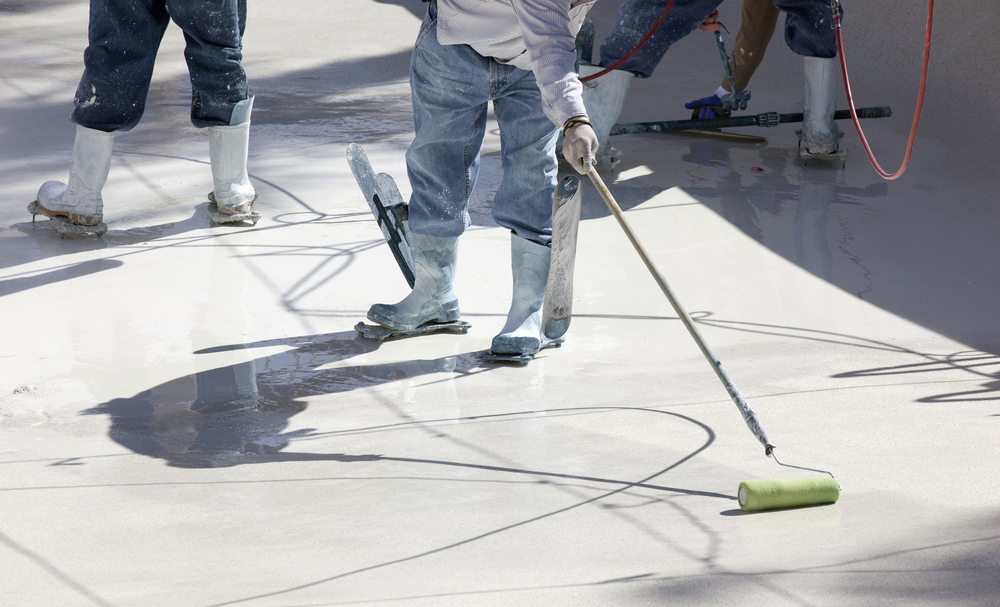
For an existing concrete surface, installation often starts by marking the drain path and removing a strip of concrete. The trench must leave enough room for the channel, base material, outlet connection, and new concrete around the drain.
The base needs to stay firm and level enough to support the channel. A weak or uneven base can let sections move over time.
Set the Height and Slope of Channel Trench Drains
Next, the drain needs to sit at the proper elevation. The grate should collect water from the surrounding surface without sticking up high enough to block flow.
At the same time, the channel and outlet route need enough fall to move water away. Poor slope can leave water sitting inside the drain instead of moving through the system.
Connect the Outlet From Channel Trench Drains
The outlet pipe carries collected water away from the channel. Its route depends on the site, grade, drainage plan, and discharge location.
Miller Outdoors checks the connection carefully so water has a continuous path from the grate to the final outlet. A weak connection or poor pipe route can cause backups during heavy rain.
Secure Channel Trench Drains Before Replacing Concrete
Before new concrete goes in, the channel must stay firmly in position. Movement during the pour can change the height or slope of the drain.
Once the channel is secured, concrete can be placed around it. The surrounding surface should pitch toward the grate so runoff reaches the drain instead of stopping beside it.
This is one reason professional installation can save trouble. Miller Outdoors can plan the drain as part of a professional drainage project instead of treating the channel as a stand-alone strip added to the concrete.
What Maintenance Do Channel Trench Drains Need?
In the same way, most surface drains need simple routine care. Leaves, grass clippings, mulch, dirt, and small debris can settle on the grate or inside the channel over time. When that buildup gets heavy, water may move more slowly.
Check the grate after major storms, remove surface debris, and clean the channel when sediment starts collecting inside. From time to time, look at the outlet during rain to see whether water is moving freely. If water backs up, sits in the channel, or spills over the grate, the system may have a blockage, damaged section, or outlet problem.
Regular care is much easier than waiting for a drain to stop moving water during a strong storm.
What Can Affect the Cost of Channel Trench Drains?
For instance, there is no single price for every trench drain project. Cost can change with drain length, grate material, traffic rating, excavation depth, outlet piping, concrete removal, concrete replacement, grading work, and access to the installation area.
A short drain beside a patio can be a very different job from a long driveway drain tied into a larger drainage route. For that reason, Miller Outdoors looks at the full water problem before recommending a drain size or installation plan.
If drainage is one part of a new backyard, patio, pool, or planting project, reviewing the full scope early can make budgeting easier. Miller Outdoors can plan drainage around the rest of the outdoor work rather than cutting into finished surfaces later.
Contact Miller Outdoors for Drainage Installation in New Orleans
Channel trench drains can be a practical way to collect water across driveways, patios, pool decks, walkways, and other hard surfaces. The channel itself is only one piece of the job. Placement, grade, outlet routing, surrounding concrete, and the full drainage path determine how well the system works after the next heavy rain.
Miller Outdoors plans drainage around the property as a whole, including hardscape, planting areas, pools, irrigation, and outdoor living features. If standing water keeps showing up in the same place, or a new outdoor project needs a better drainage plan from the start, schedule your discovery call with Miller Outdoors.
Call (504) 452-3131 or visit the Miller Outdoors Contact Page to talk about channel trench drains, surface drainage, and a plan built around your property.
FAQs About Channel Trench Drains
Are Channel Trench Drains the Same as a Channel Drain?
Yes. Homeowners may hear trench drain, channel drain, linear drain, or strip drain used for similar surface drainage systems. The exact product can differ by width, depth, grate style, load rating, and material, so the site still needs the right system for the job.
Can Channel Trench Drains Stop Water From Entering a Garage?
Channel trench drains can help when surface runoff flows across a driveway toward the garage. The drain must sit in the right location, span the water path, and connect to a working outlet. Site slope still plays a major role, so Miller Outdoors checks the full drainage path before recommending a setup.
Can Channel Trench Drains Go Around a Pool or Patio?
Yes. Linear drains can work along pool decks, patios, outdoor kitchens, and other hard surfaces. Drain placement should fit the surface pitch and finished design, which is easier to plan before or during a larger outdoor living project.
Do Channel Trench Drains Need Professional Installation?
Some small drain products are sold for do-it-yourself projects, yet concrete work and larger runoff problems can get expensive when the grade or outlet is wrong. Professional planning can help match the channel size, grate, slope, outlet, and surrounding surface to the property.