
Outdoor lighting can change how a yard looks and works after sunset. A dark path can become easier to follow, a patio can feel ready for dinner, and a favorite tree can become a strong visual feature. Good lighting doesn’t mean placing bright fixtures in every corner. In fact, the best landscape lighting ideas often use a soft mix of path lights, downlights, wall lights, and small accent fixtures.
At Miller Outdoors, landscape lighting is planned as part of the full outdoor space. Fixture placement, beam direction, brightness, plant growth, seating areas, and walking routes all need to work together. That way, the yard feels comfortable rather than harsh or overlit.
Landscape Lighting Ideas for Planning the Whole Yard
Many homeowners begin by collecting landscaping ideas with lights, but a clear plan needs more than a group of attractive photos. Before choosing fixtures, it helps to look at how the yard gets used at night. Start with the places that need clear visibility, such as steps, gates, paths, patio edges, and changes in ground level. Next, mark the areas that deserve softer visual attention, such as trees, garden beds, water features, or outdoor walls.
A strong lighting plan usually has three layers. The first layer helps people move safely. The second layer supports outdoor activities, including cooking, dining, and sitting. The third layer adds depth by lighting selected plants, walls, or architectural details.
Miller Outdoors can connect the lighting plan with Landscape Design & Installation, so fixture locations match the shape of the beds, paths, trees, and lawn. Planning both at the same time can prevent fixtures from ending up behind fast-growing shrubs or in spots where lawn equipment may hit them.
Landscape Lighting Ideas for Walkways and Steps
Walkways need enough light to guide each step, yet the fixtures shouldn’t shine straight into a person’s eyes. Path lights with shielded tops can cast light down across the walking surface. Low-voltage fixtures can work well along curved paths, garden trails, and routes that connect the house to a patio, pool, or driveway.
Spacing matters, too. Placing a light every few feet can make a path look like an airport runway. A staggered layout often feels more natural. Light can fall from one side, then the other, creating a gentle rhythm without making the route look rigid.
For steps, lights can fit into nearby walls, sit below stair treads, or mount on posts. Each choice depends on the material, the step width, and nearby planting. The goal is simple: show the edge of each step and make height changes easy to see.
Useful walkway options include:
- Shielded path lights: These fixtures aim light at the ground and reduce glare. Shielded models work best when the beam reaches the path without flooding the nearby lawn.
- Recessed step lights: These lights fit into walls, risers, or hardscape surfaces. Recessed fixtures offer a clean look and can mark stairs without adding tall fixtures.
- Downlights from trees or structures: A fixture mounted above can cast a soft pool of light across a path. This method can create a moonlit effect when the fixture stays hidden from view.
- Bollard lights: These short posts can suit wider paths, entries, and larger outdoor areas. The light should remain controlled so it doesn’t spill into windows or neighboring property.
Landscape Lighting Ideas for Patios and Outdoor Living Areas
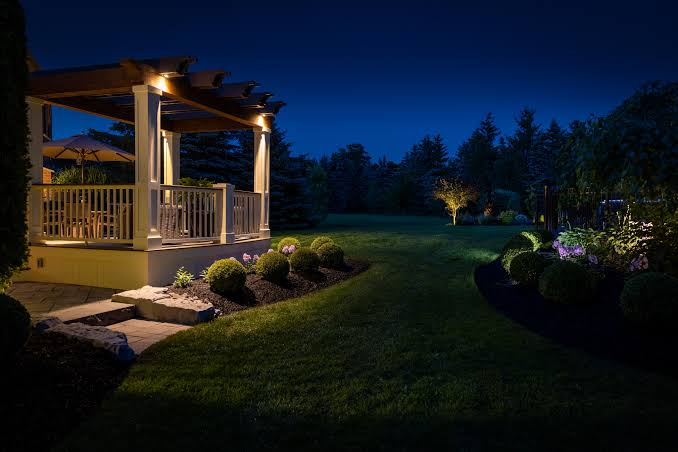
Patio lighting needs to support real activities. People may cook, eat, talk, read, or watch children play. One bright floodlight usually won’t serve all those needs. It can flatten the space, create glare, and leave hard shadows.
Layered lighting works better. Wall-mounted fixtures can provide broad light near doors. Small downlights can brighten counters or grills. Lights beneath seat walls, steps, or capstones can mark the edges of the patio. String lights may add a casual touch, yet the main lighting plan should still provide steady, practical coverage.
For a patio that’s part of a larger build, Miller Outdoors can plan lighting alongside Outdoor Living Spaces Design & Construction. This can make it easier to hide wiring, place switches, set fixture boxes, and prepare for future features before the hardscape is complete.
A few practical patio ideas include:
- Light the task areas first. Cooking counters, grills, sinks, and serving areas need clear light. The beam should cover the work surface without shining into the cook’s face.
- Use softer light around seating. Warm, lower-level fixtures can make conversation areas feel relaxed. Wall lights, under-cap lights, and nearby downlights can work together without making the patio feel too bright.
- Mark edges and level changes. Seat walls, steps, and raised sections need clear visual lines after dark. Small fixtures can show those edges and help guests move around with more confidence.
- Add dimming or zones. Separate controls let homeowners brighten the cooking area and lower the light near seating. The U.S. Department of Energy notes that advanced exterior lighting controls can cut energy use and operating costs beyond fixture efficiency alone. Read the DOE guidance on energy-efficient exterior lighting.
Landscape Lighting Ideas for Gardens and Planting Beds
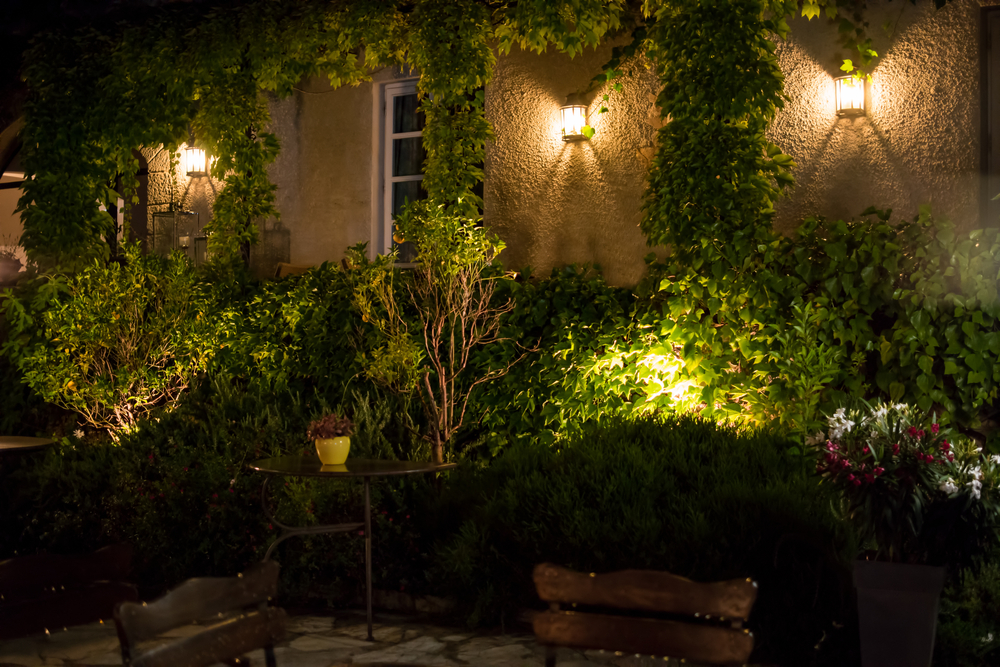
Garden lighting works best when it picks a few strong features rather than lighting every plant. A Japanese maple, palm, oak, fountain, sculpture, or textured wall may serve as a focal point. Smaller plants can stay partly in shadow, which adds depth and keeps the yard from looking flat.
Uplighting sends a beam from the ground into a tree canopy or across a wall. Downlighting places the source above and aims it at the ground. Backlighting can create a silhouette by placing the fixture behind a plant. Grazing sends light close across brick, stone, or bark to show texture.
Plant growth needs attention from the start. A fixture that looks perfect beside a small shrub may disappear once the shrub fills out. Miller Outdoors plans with mature plant size in mind, then places fixtures where leaves and branches won’t block the beam too soon.
Good garden lighting ideas include:
- Uplight one or two feature trees: This draws the eye into the yard and adds height after dark. Narrow beams can suit tall trunks, and wider beams can cover broad canopies.
- Wash a garden wall with soft light: A wide beam can create a calm background behind planting beds. It may help the yard feel larger by showing the far edge of the space.
- Backlight ornamental grasses: Light passing through thin leaves can create movement and soft shadows. This works best with careful fixture placement, since an exposed lamp can cause glare.
- Add small lights near garden art: A sculpture, pot, or fountain can serve as a nighttime focal point. The beam should frame the feature without washing out nearby plants.
Landscape Lighting Ideas Using LED Landscape Lighting
LED landscape lighting works well for many outdoor projects since it offers low energy use, long service life, and a wide range of fixture sizes. It can support warm patio light, narrow tree uplighting, step lighting, and low-level path lighting within one connected system.
Color temperature has a big effect on the final look. Warm white light often suits wood, brick, stone, and green planting. Cooler white light may feel too sharp in a relaxed yard, though it can suit certain modern materials.
Brightness matters just as much. More lumens don’t always mean a better result. A smaller, well-aimed fixture may do more than a bright fixture placed in the wrong spot.
Quality fixtures should stand up to rain, moisture, heat, soil contact, and lawn care. Connections need weather protection, and transformers need enough capacity for the planned system. A professional setup can leave room for later additions, such as new garden beds, a kitchen, or a pool.
Landscape Lighting Ideas Around Pools and Water Features
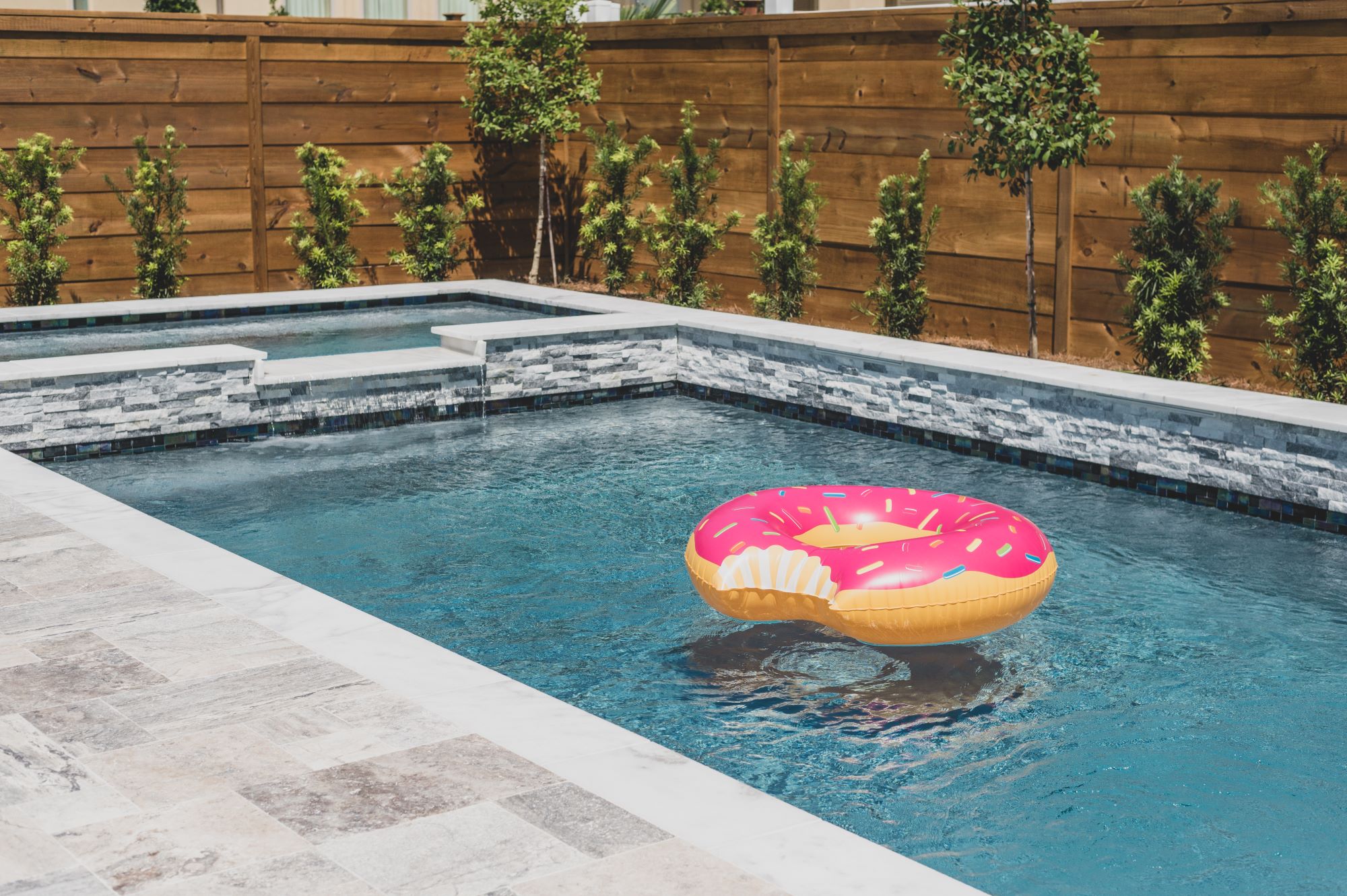
Lighting around a pool needs a careful balance. The area must be easy to move through, yet harsh light can reflect off the water and cause glare. Path lights, wall lights, step lights, and downlights can help define the pool deck without pointing bright beams across the water.
Miller Outdoors can coordinate outdoor lighting with Pool Design & Construction. Planning the pool and lighting together gives more control over fixture locations, conduit routes, deck details, planting, and sightlines from the house.
Water features can use subtle light to show movement. A narrow beam may catch falling water, and a hidden light may brighten a basin or nearby wall. Less is often more here. A small amount of well-placed light can make water feel calm, but too much brightness can turn it into a distraction.
Landscape Lighting Ideas That Avoid Common Mistakes
Many lighting problems come from using too many fixtures, choosing bulbs that are too bright, or aiming beams without checking the view from inside the house. A plan should look good from the patio, yet it should look good through kitchen, bedroom, and living room windows.
Common mistakes include:
- Using one fixture type everywhere: A row of matching path lights may cover the ground, but it can make the yard feel flat. Mixing path lighting, downlighting, and accent lighting creates more depth.
- Pointing fixtures into people’s eyes: Exposed bulbs and poorly aimed beams can make a space uncomfortable. Shields, lower output, and careful aiming can keep the source out of direct view.
- Ignoring future plant growth: Branches and leaves can cover a beam or push against a fixture. Planning around mature sizes can reduce future moves and repairs.
- Skipping maintenance access: Fixtures may need cleaning, aiming, or replacement. Each fixture should be reachable without damaging plants or hardscape.
- Forgetting controls: Timers, dimmers, smart controls, and lighting zones make the system easier to use. A patio may need brighter light during dinner and softer light later in the evening.
Landscape Lighting Ideas and Budget Planning
Project cost depends on the number of fixtures, fixture quality, transformer size, wiring distance, controls, trenching, hardscape work, and site access. A small path-lighting job may need a simple setup, but a full yard with trees, patios, steps, and a pool can require several zones and fixture types.
Homeowners can start with the Landscape Design Cost Calculator to get a clearer sense of project planning. From there, Miller Outdoors can review the site, discuss how the yard gets used, and build a lighting plan that fits the broader outdoor project.
A phased plan may make sense for some properties. The first phase can cover paths, steps, and entries. A later phase can add patio, garden, pool, or feature lighting. Conduit, transformer capacity, and controls should account for those future additions from the start.
Landscape Lighting Ideas Start With a Clear Miller Outdoors Plan
The best landscape lighting ideas connect safety, comfort, and visual balance. Walkways need clear edges, patios need layered light, and gardens need a few carefully chosen focal points. With the right fixture types and placement, the yard can feel useful and inviting long after sunset.
Miller Outdoors can plan lighting as part of a new outdoor project or add it to an existing space. The team can review walking routes, planting, patio use, pool areas, fixture styles, controls, and future additions before work begins.
Call (504) 452-3131 or visit the Miller Outdoors Contact Page to discuss your project. Homeowners can Schedule Your Discovery Call and start building a practical lighting plan for walkways, patios, and gardens.
Frequently Asked Questions About Landscape Lighting Ideas
Which Landscape Lighting Ideas Work Best for a Small Yard?
A small yard usually benefits from fewer fixtures with careful aiming. Path lights, one feature-tree uplight, and soft patio lighting may be enough. Keeping some areas darker can create depth and stop the space from feeling crowded.
How Bright Should Landscape Lighting Ideas Be?
Outdoor lighting should be bright enough for safe movement and normal activities, but it shouldn’t feel like daytime. Low-output fixtures often work well when several layers share the job. Dimmers and separate zones give better control.
Are LED Fixtures Good for Landscape Lighting Ideas?
Yes, LED fixtures can suit paths, steps, patios, trees, walls, and water features. LED technology uses less electricity than many older lamp types and comes in many beam spreads and warm color options. Fixture quality and correct installation still matter.
Can Landscape Lighting Ideas Be Added to an Existing Yard?
Yes, lighting can be added to many existing yards. The plan needs to account for hardscape, roots, irrigation, drainage, plant beds, and access for wiring. A site review helps identify the cleanest installation route.
Should Landscape Lighting Ideas Stay on All Night?
They don’t need to stay on all night. Timers, smart controls, and zones can lower or switch off selected lights later at night. Entry and safety lights may stay on longer than garden accent lights.